
Part 1: Social Media, Gaming, and the Nervous System
There is a conversation I find myself having repeatedly in my own life and clinically.
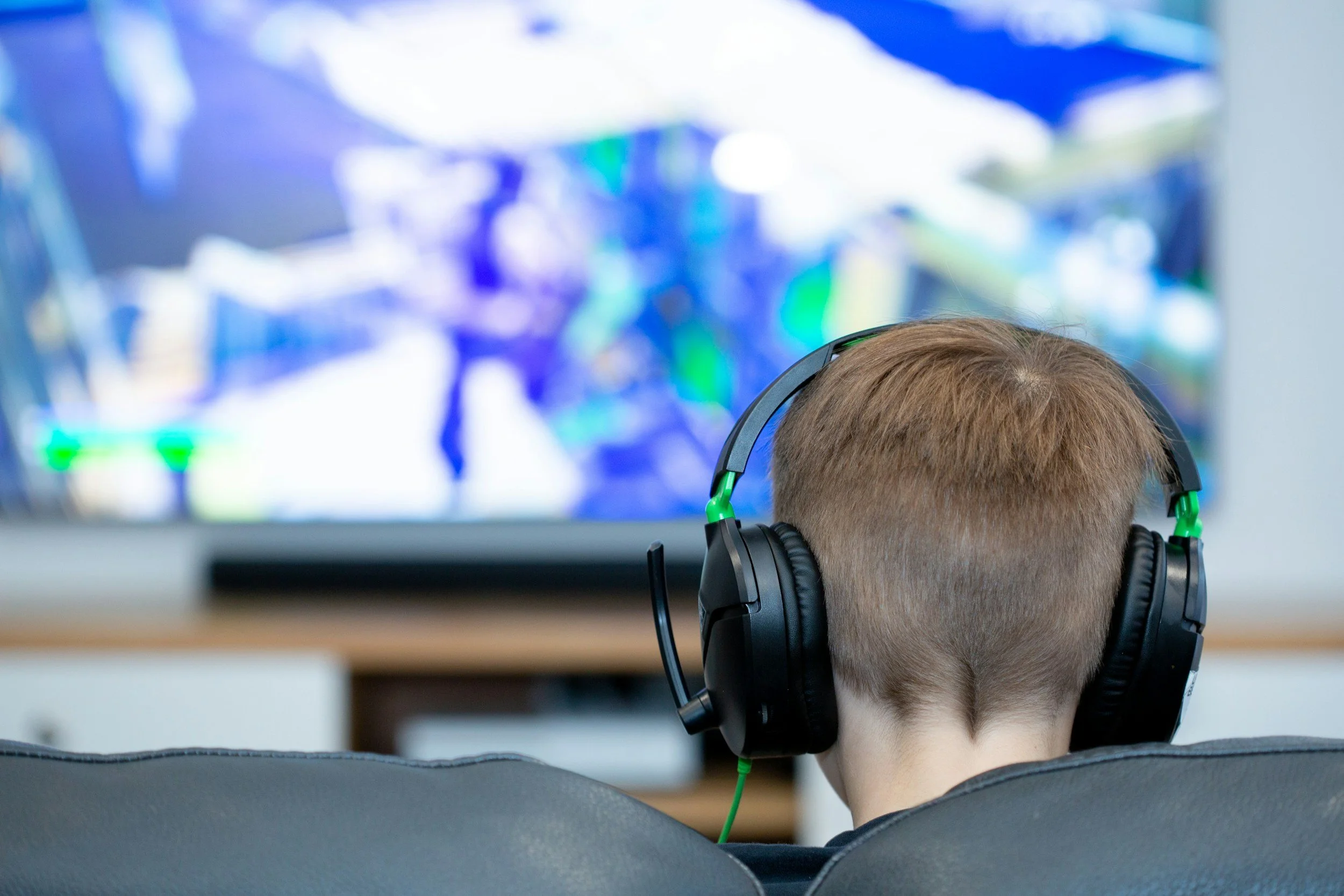
A parent (or anyone really) describes a teenager (again....really anyone) who seems to disappear behind a screen. They have tried everything; taking the phone away, setting limits, turning off the Wi-Fi, or asking...sometimes repeatedly....“Can you please get off your game/phone?”
An adult tells me they opened social media for “just a few minutes” and suddenly an hour or more has passed. They feel frustrated with themselves, disconnected from the people around them, guilty and maybe even ashamed, and underneath both experiences there is something more complicated going on than just a lack of discipline or motivation.
The Nervous System Learns What Works
The nervous system learns through repetition. What captures our attention, gives us a reward, reduces discomfort, or keeps us engaged is something the brain becomes more likely to seek again.
This matters when we talk about social media, gaming, and other digital environments. These platforms are built around rapid stimulation, novelty, social feedback, and unpredictable rewards. There is always another video, another notification, another message, another level, another achievement, or another opportunity to win.
That unpredictability matters. The brain doesn't need to know exactly when the reward is coming for the possibility of the reward to keep us engaged.
We see this same principle in gambling. Casinos use lights, sounds, novelty, and unpredictable reinforcements to keep people engaged. Digital platforms can leverage many of these same mechanisms, except the stimulation is available from a device in a child's pocket, bedroom, or backpack.
And this is where adolescence matters. The adolescent brain is still developing, particularly the systems involved in impulse control, planning, decision-making, and emotional regulation. At the same time, adolescents are particularly sensitive to reward, novelty, peer feedback, and social connection.
That combination creates a developmental vulnerability.
When a young person spends hours in an environment designed to repeatedly capture attention and provide rapid rewards, there can be real consequences. Excessive or problematic screen use has been associated with sleep disruption, impaired functioning, mental health concerns, and difficulty disengaging. Problematic gaming, in particular, has been associated with poorer sleep and psychiatric and emotional difficulties in adolescents. This does not mean that every teenager who plays video games or uses social media will develop a mental health problem. It means that the risks are real; the developmental context matters, and excessive or compulsive use should not be dismissed as simply a lack of discipline. The question then isn’t whether screens can affect the nervous system; it’s more about what is happening when a developing nervous system is repeatedly exposed to an environment designed to keep it engaged—and what gets displaced in the process.
Sleep?
Movement?
Face-to-face connection?
Family relationships?
Unstructured play?
Boredom?
The opportunity to learn how to tolerate uncomfortable emotions without immediately escaping them?
Those losses matter too.
This is why reducing harmful screen use isn't simply about taking away a device. It is about helping children and adolescents rebuild the capacity for regulation, connection, attention, boredom tolerance, and real-world reward. This is where the work becomes much bigger than “get off your phone.”
Erin Awes, MSW, SWLC, LAC
References
American Psychological Association. (2023). Health advisory on social media use in adolescence.
National Academies of Sciences, Engineering, and Medicine. (2024). Social Media and Adolescent Health.
Volkow, N. D., Koob, G. F., & McLellan, A. T. (2016). Neurobiological advances from the brain disease model of addiction. New England Journal of Medicine, 374(4), 363–371.
Schultz, W. (2016). Dopamine reward prediction-error signaling: A two-component response. Nature Reviews Neuroscience, 17, 183–195.
Schwartz, R. C. (2021). No Bad Parts: Healing Trauma and Restoring Wholeness with the Internal Family Systems Model.
Labor, N. The Addictoholic Reconstructing.
LePera, N. (2021). How to Do the Work: Recognize Your Patterns, Heal from Your Past, and Create Your Self. Harper Wave.